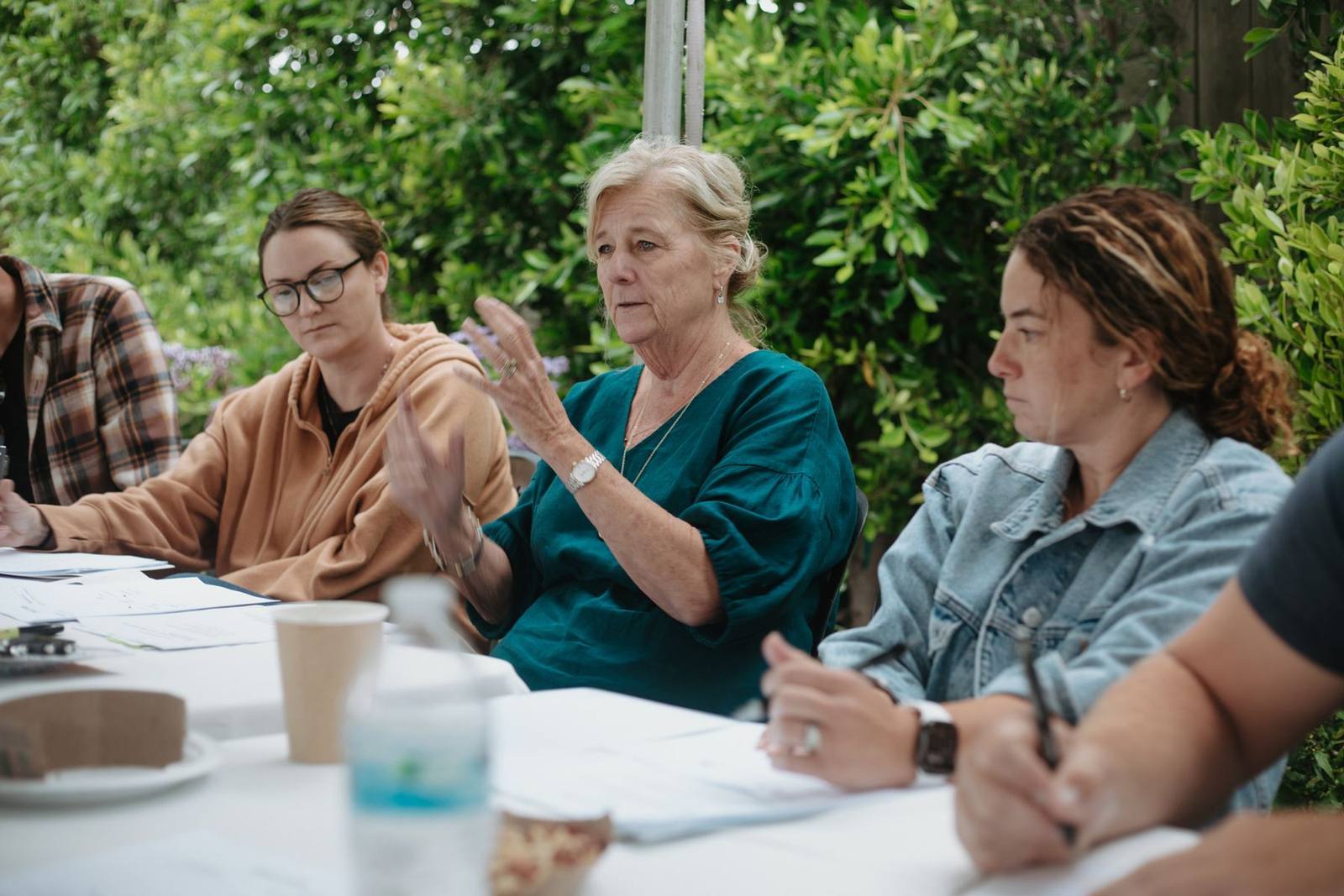
Dr. Karen BergstromPsychologistExecutive coachTPRAT certification
Relational growth for Relational growth for leaders, teams, pastors, boards and campuses
Start with the TPRAT, the assessment of four life capacities she trains and certifies leaders in. Then grow from there, with 35 years of practice beside you.
Thirty-five years alongside leaders in every sector
Taco Bell, Microsoft, Oregon Department of Human Services, California Department of Social Services, Colorado Department of Human Services, Idaho Department of Health and Welfare, State of Alaska, Cru, Bethany Christian Services, Seattle Pacific University, Safe Families for Children, Catholic Community Services, Lutheran Family Services, Townsend Leadership, Concordia University Irvine, Asbury University, Mariners Church, Redeemer Presbyterian Church, Revere, Church of the City, St. Andrew’s Presbyterian Church, Olivecrest, Orange County Rescue Mission, Fort Wayne Rescue Mission, OC United, Calvary Church, Hearts with a Mission, Twin Cedars Youth and Family Services, Beacon Hill, CAFA, Kindred Partners, Uniquely Knitted, J.L. Childress, Aquarius Chemical, GrowthSkills, Radiant Sun, Harvest Counseling, Restored Pathways Counseling, Greg Richards Law and more.
35+
Years of practice
Psychologist, executive coach and professor.
5
State agencies
Human services departments across the West.
39
Organizations
Brands, nonprofits, universities and churches.
4
Life capacities
Measured by the TPRAT, the assessment she certifies leaders in.
Find your path
Which path is right for you?
TLP cohort, 2025
Cohort
12 months
Starts September
Grow alongside other leaders in a year-long TLP cohort
Research-based leadership development in a small group, with one-to-one time built in. Applications open late spring through summer.
Pick one up and toss it. Tap to choose it for today.
Speaking and media
Bring Karen to your people
Keynotes, retreats and leadership days for organizations, universities and churches. Most talks pair with a follow-up workshop, so what people see on the day turns into growth.
I don’t want to just see something in people while speaking places and say ‘bye,’ but want to help them see it and also how to grow.
The TPRAT is a 20-minute online assessment that measures four life capacities: Attachment (building trust), Separation (setting boundaries), Integration (engaging reality) and Adulthood (living with ownership). Its full name is the Townsend Personal and Relational Assessment Tool. A validation study with 1,145 participants reduced it to 20 items. Dr. Karen Bergstrom trains and certifies leaders to use it.
Who is Dr. Karen Bergstrom?
Dr. Karen Bergstrom is a psychologist, executive coach and professor based in Orange County, California, with more than 35 years of practice. She is Director of Leadership at Townsend Leadership Group and certifies TPRAT facilitators. She has worked with 39 organizations, including five state human services agencies, Taco Bell, Microsoft, universities and churches.
What are the four life capacities?
The four life capacities are Attachment, Separation, Integration and Adulthood. Attachment is building trust by being open with others. Separation is setting boundaries and owning your voice. Integration is facing loss, failure and hard news without self-judgment. Adulthood is relating as a mutual adult and following your purpose with your full talents.
How can I work with Dr. Bergstrom?
You can work with Dr. Bergstrom through executive group coaching, TPRAT facilitator certification, workshops and speaking, or a year-long TLP cohort. Consulting and Flourish groups for women are available on request. Start with the contact form on this site and choose the topic that fits.
How do I become a certified TPRAT facilitator?
To become a certified TPRAT facilitator, apply through the contact form and choose TPRAT certification as the topic. The certification is for coaches, HR professionals and counselors, and teaches you to guide people through the TPRAT and the growth work that follows.
What is a TLP cohort?
A TLP cohort is a 12-month, research-based leadership development program for a small group of leaders, with one-to-one time built in. Cohorts start in September, and applications open late spring through summer.
How long does relational growth take?
Relational growth with Dr. Bergstrom usually takes about a year. Leaders take the TPRAT, debrief the results one to one in weeks two and three, choose a path in month one, grow in relationship over months two to twelve, then retake the TPRAT to measure the change.
Does Dr. Bergstrom speak at events?
Yes, Dr. Bergstrom gives keynotes, retreats and leadership days for organizations, universities and churches. Her topics include the four life capacities, boundaries for leaders and pastors, relational health in organizations, and growing through failure and loss. Most talks pair with a follow-up workshop.
What are the 22 relational nutrients?
The 22 relational nutrients are the things people need from each other to grow, from People Fuel by Dr. John Townsend. They fall into four groups: be present, convey the good, provide reality and call to action. This site has a free interactive card and worksheet for them.
This paper presents a reliability and validity assessment of the TPRAT. The analysis had two parts: a confirmatory factor analysis to test whether the data support the four proposed dimensions, and a partial validation against established instruments measuring similar and different things.
1,145participants analyzed
64 to 20items after factor analysis
4character capacities
6validated instruments compared
.75–.80Cronbach’s alpha by scale
01 · Introduction
The theory behind the TPRAT
Proficiency in life capacities and internal character matters because it shows up as particular abilities, especially in meeting the demands of reality: oneself, relationships and work. The paper proposes four key dimensions.
The theoretical base draws on neuroscience, object relations theory, cognitive behavioral theory, business and leadership research, and spiritual growth models. The TPRAT was created to measure a person’s proficiency in these four domains.
02 · Design and implementation
The validation study
The Townsend Group invested in this study for two reasons: to streamline the instrument to fewer questions, and to confirm its validity as an assessment tool. The survey combined the 64 TPRAT items with 113 questions from six validated surveys, each matched to one or more capacities. It was built online with the support of Concordia College and fielded from August 2022 to August 2023.
From survey to analysis
Started the survey1,470
Included in all analyses1,145
Participants were included when they completed 90% of required items, nearly 80% of those who started.
03 · Results, demographics
Who took part
More than half of the 1,145 participants were 50 or older, and 85% held at least a bachelor’s degree or a professional or trade certification. The sample included executives, small business owners, executive directors, HR professionals, pastors, therapists and educators.
Age
2%18–24
6%24–30
14%30–40
24%40–50
38%50–65
16%65+
54% were 50 or older. 78% were 40 or older.
Sex
Female 71%Male 29%
70% married
77% have children
15% single, 11% divorced, 2% separated, 2% widowed.
Highest education
Master’s degree45%
Bachelor’s degree29%
Doctorate8%
Some college7%
Associate’s degree5%
Professional or trade certification3%
High school diploma or GED3%
Less than high school1%
n = 1,145 for all figures.
04 · Results, confirmatory factor analysis
Finding the strongest items
Confirmatory factor analysis tests whether the data fit a measurement model based on theory. Here it also pared the TPRAT down to a shorter, more streamlined tool.
64 initial items
−18 removed for complex loadings or highly correlated errors
20 final items, five per capacity, the highest loadings
.070RMSEA90% CI .066 to .074
.88Comparative Fit Index
.86Tucker-Lewis Index
The model fit the data reasonably well: the proposed factor structure was similar to the observed one. Reliabilities were acceptable and all scales were highly correlated with each other (r ≥ .44).
The final instrumentBar length shows each loading (λ). All significant, p < .001. R marks a reverse-coded item.
I have difficulty telling others how much they really mean to me. R
.62
I find it difficult to be in touch with my deeper emotions. R
.67
It is difficult for me to ask for help or support from others. R
.62
I have a tough time talking about my feelings, even with those I am close to. R
.84
When I am in a small group, I tend to keep my vulnerable feelings to myself. R
.63
I can communicate what I want and do not want in my work and relationships.
.67
When I disagree with someone, I prefer to remain silent.
−.46
I put too much time and energy into people-pleasing. R
−.72
I have difficulty being clear on my own opinions and values when speaking to others.
−.65
I avoid saying “no” so that I will not risk rejection or hurt someone’s feelings. R
−.76
I readily forgive others for their mistakes.
.49
I know and accept my weaknesses.
.53
When I fail, I am able to try again.
.68
When I am disappointed by someone, I am still mindful of their good points at the same time.
.61
When I fail, I can deal with the disappointment in a healthy way.
.74
I am clear on my life’s mission and path.
.71
I have struggled with finding my career niche. R
−.69
I am frustrated I have not sufficiently developed my potential. R
−.70
I usually confront those in authority in ways that are amicable for all.
.44
I am comfortable relating to those in authority.
.54
05 · Results, validation
How the TPRAT compares
A validation analysis asks, are you building the right thing? Each capacity was compared with publicly available, validated instruments. The comparison scales were internally consistent, and Pearson correlations were read against Cohen’s thresholds.
Scored toward a secure style, Attachment correlated negatively with AAQ Avoidance and AAQ Anxiety, in the expected direction, though the relationship with Anxiety was weak.
DSI Emotional Reactivity
.45Moderate
DSI Fusion with Others
.45Moderate
DSI I-Position
.28Weak
DSI Emotional Cutoff
.16Weak
Moderately positive with Emotional Reactivity and Fusion with Others, and weakly positive with I-Position and Emotional Cutoff.
AAG Resilient
.53Strong
Hypersensitive Narcissism
−.47Moderate
AAG Overwhelmed
.33Moderate
MPS Socially Prescribed
−.32Moderate
MPS Self Oriented
−.22Weak
MPS Other Oriented
−.11Weak
AAG Controlled
.05Little to none
A moderate association with the Hypersensitive Narcissism Scale and with socially prescribed perfectionism, in the expected direction. Strong with AAG Resilient, moderate with AAG Overwhelmed, very weak with AAG Controlled.
PERMA Overall Well-Being
.65Strong
PERMA Meaning
.64Strong
Rosenberg Self-Esteem
.64Strong
PERMA Accomplishment
.60Strong
PERMA Positive Emotions
.59Strong
PERMA Relationships
.46Moderate
PERMA Negative Emotion
−.44Moderate
PERMA Engagement
.43Moderate
PERMA Loneliness
−.38Moderate
PERMA Health
.32Moderate
Generally strong. Four of nine PERMA measures were strongly positive, the other five moderate, and Rosenberg Self-Esteem was also strongly positive. Negative Emotion and Loneliness ran in the expected direction.
06 · Highlights
What the analysis suggests
These results demonstrate validity of the 20-item TPRAT survey instrument. The predicted relationships between the TPRAT scales and the validation scales were mostly strong and in the expected direction.
All four scales showed moderate to strong association with the corresponding validated scales in all, or almost all, instances.
Cronbach and Raykov reliabilities were high for every scale.
The confirmatory factor model fit the data, supporting the four-capacity structure.
The instrument was streamlined from 64 items to 20, five per capacity.
Each item is answered on a six-point scale, from 1 Strongly disagree to 6 Strongly agree.
01
I usually confront those in authority in ways that are amicable for all.
Adulthood
02
When I fail, I can deal with the disappointment in a healthy way.
Integration
03
I can communicate what I want and do not want in my work and relationships.
Separation
04
I have struggled with finding my career niche.
Adulthood
05
When I disagree with someone, I prefer to remain silent.
Separation
06
I have difficulty telling others how much they really mean to me.
Attachment
07
I avoid saying “no” so that I will not risk rejection or hurt someone’s feelings.
Separation
08
I am comfortable relating to those in authority.
Adulthood
09
I find it difficult to be in touch with my deeper emotions.
Attachment
10
I am frustrated that I have not sufficiently developed my potential.
Adulthood
11
It is difficult for me to ask for help or support from others.
Attachment
12
I know and accept my weaknesses.
Integration
13
I have a tough time talking about my feelings, even with those I am close to.
Attachment
14
I readily forgive others for their mistakes.
Integration
15
I am clear on my life’s mission and path.
Adulthood
16
When I fail, I am able to try again.
Integration
17
When I am disappointed by someone, I am still mindful of their good points at the same time.
Integration
18
I put too much time and energy into people-pleasing.
Separation
19
I have difficulty being clear on my own opinions and values when speaking to others.
Separation
20
When I am in a small group, I tend to keep my vulnerable feelings to myself.
Attachment
References
Alessandri, G., Vecchione, M., Eisenberg, N., and Łaguna, M. (2015). On the factor structure of the Rosenberg (1965) General Self-Esteem Scale. Psychological Assessment, 27(2), 621 to 635.
Butler, J., and Kern, M. L. (2015). The PERMA-Profiler: A brief multidimensional measure of flourishing.
Caligor, E., et al. (2018). Psychodynamic therapy for personality pathology: Treating self and interpersonal functioning. The American Journal of Psychiatry, 175(12), 1268 to 1269.
Cohen, J. (1988). Statistical Power Analysis for the Behavioral Sciences (2nd ed.). Hillsdale, NJ: Lawrence Erlbaum Associates.
Covey, S. (2018). The Seven Habits of Highly Effective People, 30th anniversary edition.
Goleman, D., et al. (2013). Primal Leadership: Unleashing the Power of Emotional Intelligence. Harvard Business Review Press.
Hendin, H. M., and Cheek, J. M. (1997). Assessing hypersensitive narcissism: A reexamination of Murray’s Narcissism Scale. Journal of Research in Personality, 31(4), 588 to 599.
Hewitt, P. L., and Flett, G. L. (1990). Perfectionism and depression: A multidimensional analysis. Journal of Social Behavior and Personality, 5(5), 423 to 438.
Lencioni, P. M. (2022). The 6 Types of Working Genius. BenBella Books.
Machin, L. (2007). The Adult Attitude to Grief Scale as a tool of practice for counsellors working with bereaved people. Age Concern, Tameside and Keele University.
Piedmont, R. L., et al. (1991). Adjective Check List scales and the five-factor model. Journal of Personality and Social Psychology, 60(4), 630 to 637.
Simpson, J. A., Rholes, S. W., and Phillips, D. (1996). Conflict in close relationships: An attachment perspective. Journal of Personality and Social Psychology, 71, 899 to 914.
Skowron, E. A., and Schmitt, T. A. (2003). Assessing interpersonal fusion: Reliability and validity of a new DSI fusion with others subscale. Journal of Marital and Family Therapy, 29(2), 209 to 222.
Relationally healthy teams meet their goals and build a culture of shared values, trust and open communication. Four indicators set them apart. Rate your team on each, then look at the people and patterns behind the numbers.
ConvictionThe 1st C--
CohesivenessThe 2nd C--
ClarityThe 3rd C--
CandorThe 4th C--
01The 4 C’s
Four indicators set healthy teams apart
Rate each one for your team as it is today, from 1 for not yet to 5 for consistently.
The 1st C
Conviction
United by a common mission
When we have conviction, we are guided by our mission and core values, not by our feelings in the moment or the stresses and glitches of the day. Teams with conviction are clear on their mission, for example, “We are here to make Acme Tech more productive.” They are also clear on the compass of their values, such as excellence, quality and taking care of people. Great teams keep mission and values front and center. They talk about them, make decisions based on them, and keep them relevant.
How true is this of your team today?
Not yetConsistently
The 2nd C
Cohesiveness
Relationally and functionally trusting
A great team connects. Its members bond with and care about each other. Functional cohesion is about reliability and dependability in tasks. It is important and necessary, but on its own it creates a good team, not a great one. A great team is also relationally cohesive: personally and emotionally connected. Members are vulnerable with each other, with no fear of judgment or scorekeeping, and they give and receive energy and positivity.
How true is this of your team today?
Not yetConsistently
The 3rd C
Clarity
Ownership of roles and tasks
Teams need role clarity. Each person needs to know their tasks and job description, and how to stay in their lane. Then they are more effective and efficient, and you avoid someone neglecting what is unique to their responsibilities while drifting into a lane where someone else is already working. Clarity is kindness.
How true is this of your team today?
Not yetConsistently
The 4th C
Candor
Purposeful honesty
Conviction, cohesiveness and clarity make it safe enough to have honest, frank conversations. A great team gives and receives feedback that is both positive and negative, and always respectful. We benefit when someone says, “We have a problem here.” You do not want the mission sidelined because no one spoke up for fear of disrupting things. Candor helps a team disrupt in a positive direction.
How true is this of your team today?
Not yetConsistently
Strongest on your team
Rate all four
Grow next
Rate all four
02Healthy individuals
Healthy teams are built from healthy individuals
Choose an area, then tap each indicator that is strong for you today.
Intrapersonal
Personal
0 of 4
Relationally healthy individuals show specific behaviors and perspectives toward themselves.
Individuals who struggle here may have limited access to their emotions, defaulting to rational thinking and neglecting the emotional side of their experience. Thoughts and feelings can feel disconnected.
Interpersonal
People
0 of 5
Relationally healthy individuals show specific behaviors and perspectives with others.
Purpose
Performance
0 of 6
Relationally healthy individuals live with a clear purpose and mutual authority in what they contribute to their world.
03TPRAT teams
How each capacity shows up on a team
At high capacity a person contributes these qualities. At low capacity, these are the patterns that derail a team. Tap the ones you see on yours.
Phase 1
Building trust
Attachment
Team contributions 0 marked
Team derailers 0 marked
Phase 2
Setting boundaries
Separation
Team contributions 0 marked
Team derailers 0 marked
Phase 3
Engaging reality
Integration
Team contributions 0 marked
Team derailers 0 marked
Phase 4
Living with ownership
Adulthood
Team contributions 0 marked
Team derailers 0 marked
Nothing marked yet
Here’s to your great team
Teams are a great way to get things done, and to feel part of something larger than yourself that has purpose.
The critical relational nutrients of the high capacity leader, from People Fuel. Work through it alone, then talk it over with someone you trust. Your answers stay on this device.
Be presentQuadrant 10/6
Convey the goodQuadrant 20/6
Provide realityQuadrant 30/5
Call to actionQuadrant 40/5
01Reflect
Start with where you are
01 Which quadrant do you see yourself as strongest in, and why?
02 Which quadrant would you like to improve in, and why?
02Review each nutrient
What does each one need now?
Mark whether it needs maintenance, strengthening or healing in your life right now. Then add one practice to improve the giving and receiving of it, and who might be strong at meeting it.
Quadrant 1 of 4
Be present
Be there and “for,” fewer words.
0 of 6
Acceptance
Connect without judgment.
Attunement
Be aware of what another is experiencing, and respond to it.
Validation
Convey that a person’s experience is significant and not to be dismissed.
Identification
Share your similar story.
Containment
Allow the other to vent while staying warm without reacting.
Comfort
Provide support for someone’s loss.
Quadrant 2 of 4
Convey the good
Give words that dispense grace.
0 of 6
Affirmation
Draw attention to the good.
Encouragement
Convey that you believe in someone’s ability to do the difficult.
Respect
Assign value.
Hope
Provide reality-based confidence in the future.
Forgiveness
Cancel a debt.
Celebration
Acknowledge a win, both cognitively and emotionally.
Quadrant 3 of 4
Provide reality
Give helpful information.
0 of 5
Clarification
Bring order to confusion.
Perspective
Offer a different viewpoint.
Insight
Convey a deeper understanding.
Feedback
Give a personal response.
Confrontation
Face someone with an appeal to change.
Quadrant 4 of 4
Call to action
Push to a practical step.
0 of 5
Advice
Recommend an action step.
Structure
Provide a framework.
Challenge
Strongly recommend a difficult action.
Development
Create a growth environment.
Service
Guide engagement to giving back.
03Your focus
Where to put your attention
Maintenance
0
Strengthening
0
Healing
0
Healing and strengthening, with your practices
Mark a nutrient as needing healing or strengthening and it will appear here with your practice.
This site uses no advertising or tracking cookies. With your OK, it remembers your worksheet answers and download details in this browser so they are there next time. Read the Cookie Policy.